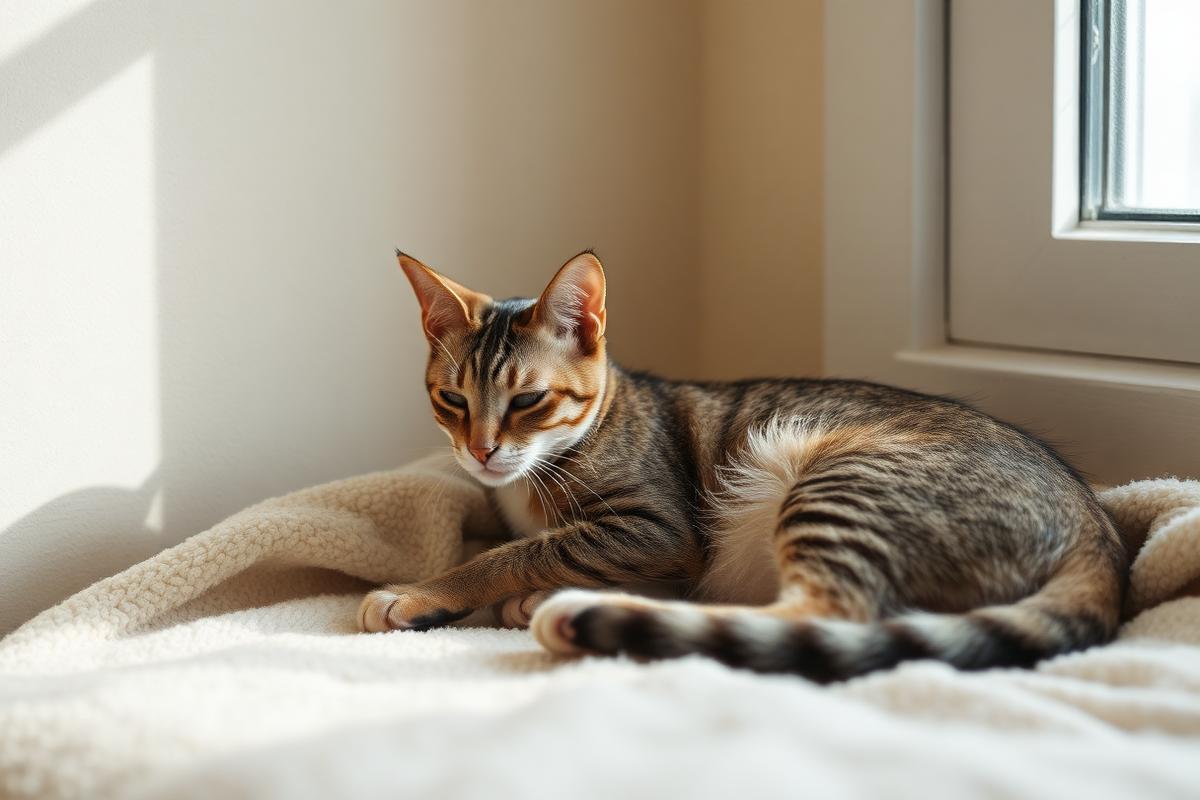
Cats conceal illness remarkably well, so decline in an older cat usually shows first as small changes at home. Weight loss along the spine, a coat that looks unkempt, jumping less, sleeping somewhere new, changes at the litter tray, and a shift in appetite or thirst all matter more than most families realise.
Families in Mission often say their cat seemed fine until suddenly she was not. In most of those cases she was not fine, she was simply excellent at not showing it, and the household had adjusted to each small change as it arrived.
Why the Masking Happens
A cat is both predator and prey, and appearing unwell has never been to a cat's advantage. On top of that, cats live in a small, controlled world where they can quietly stop doing anything that has become difficult.
A dog who cannot manage a walk makes it obvious, because the walk involves you. A cat who can no longer jump onto the bed simply sleeps on the chair instead, and nobody registers that anything happened. Most early signs are subtractions, not events, which is precisely why they get missed.
Changes You Can See
Weight. Run your hands along the spine, hips and shoulder blades. Bones that used to be padded and now feel prominent matter, and a long coat can hide this for months. Weight loss in an older cat is one of the more important things to report.
The coat. A greasy, clumped or spiky coat usually means grooming has stopped, and cats stop grooming when it hurts to twist, or when they feel unwell. Conversely, a bald patch from over-grooming one spot points somewhere too.
Posture and movement. Sitting hunched with feet tucked and eyes half closed. Jumping to lower surfaces, or taking a two-stage route up. Landing heavily. Sleeping downstairs when she always slept on your bed. Cats rarely limp visibly, so height changes are often the clearest mobility signal you will get.
Where she sleeps. A cat who moves to somewhere dark, enclosed and out of the way, or who stops sitting with the family, is telling you something.
Eyes and breathing. Watch how the chest moves when she is asleep. Faster or more effortful breathing at rest, or open-mouth breathing in a cat, needs same-day veterinary attention rather than a note in a diary.
Changes at the Litter Tray
The tray is the most informative thing in the house, and it is worth actually looking rather than scooping on autopilot.
Note bigger or more numerous urine clumps, which often accompany increased drinking. Note straining, frequent trips producing little, or any crying in the tray, which should be treated as urgent in a male cat. Note constipation, which is common and uncomfortable in older cats, and diarrhoea that persists.
Note accidents outside the tray as well, and resist reading them as spite. An older cat may be unable to climb into a high-sided tray, may not make it up the stairs in time, or may have come to associate the tray with discomfort. A second tray on each floor, with a low entry, solves a surprising number of these.
Eating and Drinking
Appetite changes in either direction are worth reporting. A cat eating noticeably more while losing weight is as significant as one eating less.
Drinking is the one families most often overlook. If you are refilling the bowl more often, if she has started drinking from taps or glasses, or if there is water on the floor near the bowl, note it.
A cat who is not eating properly for more than a day or two needs veterinary attention. Cats do not tolerate going without food the way dogs do, and appetite loss can lead to further problems fairly quickly. Do not wait it out.
Changes in Behaviour
Increased night-time vocalising is common in older cats and has several possible causes, so it is worth investigating rather than accepting. So is confusion, staring at walls, or seeming lost in a familiar room.
Some older cats become far more clingy and vocal in the day. Others withdraw entirely, stop greeting you, and stop tolerating being picked up. A previously affectionate cat who now swipes when touched in a particular area is usually sore rather than spiteful, and it belongs in what you report.
The Trap of "She Is Just Old"
Age is not a condition. Several things that commonly affect older cats are manageable, and the difference between a cat who is comfortable and one who is not can be considerable.
Only a veterinarian who examines your cat can say what is behind any of this, so the useful move is to bring specifics. Photograph her from above and from the side every month, because a photo catches weight loss that daily familiarity hides. Weigh her if you can. Keep a fortnight of notes on eating, drinking, the tray, and where she chose to sleep.
What you can do at home is make life easier. Low-sided trays, steps up to a favourite spot, a warm quiet bed, water in more than one place, and gentle brushing where she can no longer reach. Cats cope far better staying in their own territory than being carried into an unfamiliar one, which is the whole basis of in-home end-of-life care.
Frequently Asked Questions
My cat is thin but eats constantly. Is that normal ageing? No. Weight loss alongside a good or increased appetite is a specific pattern and should be examined rather than watched.
She has stopped grooming. Does that matter? Yes. A cat who stops grooming is usually either uncomfortable when twisting or feeling unwell. It is worth reporting.
He is yowling at night. Is he in pain? He may be, and there are several other possible causes in an older cat. It is common but it is not something to simply accept.
She has started missing the litter tray. Is this behavioural? Treat it as physical first. Access, mobility and discomfort explain most cases in older cats.
How do I know when it is becoming end of life? Look at the pattern over weeks rather than any single day. If the pattern is clearly sliding, that is the point to ask a veterinarian rather than to keep watching on your own.
Published by the team at Home Euthanasia Veterinary Services.
This article is provided for general information and is not a substitute for veterinary advice about your own pet. If your pet is in distress or you are worried about their comfort right now, please contact your regular veterinarian or your nearest emergency animal hospital.