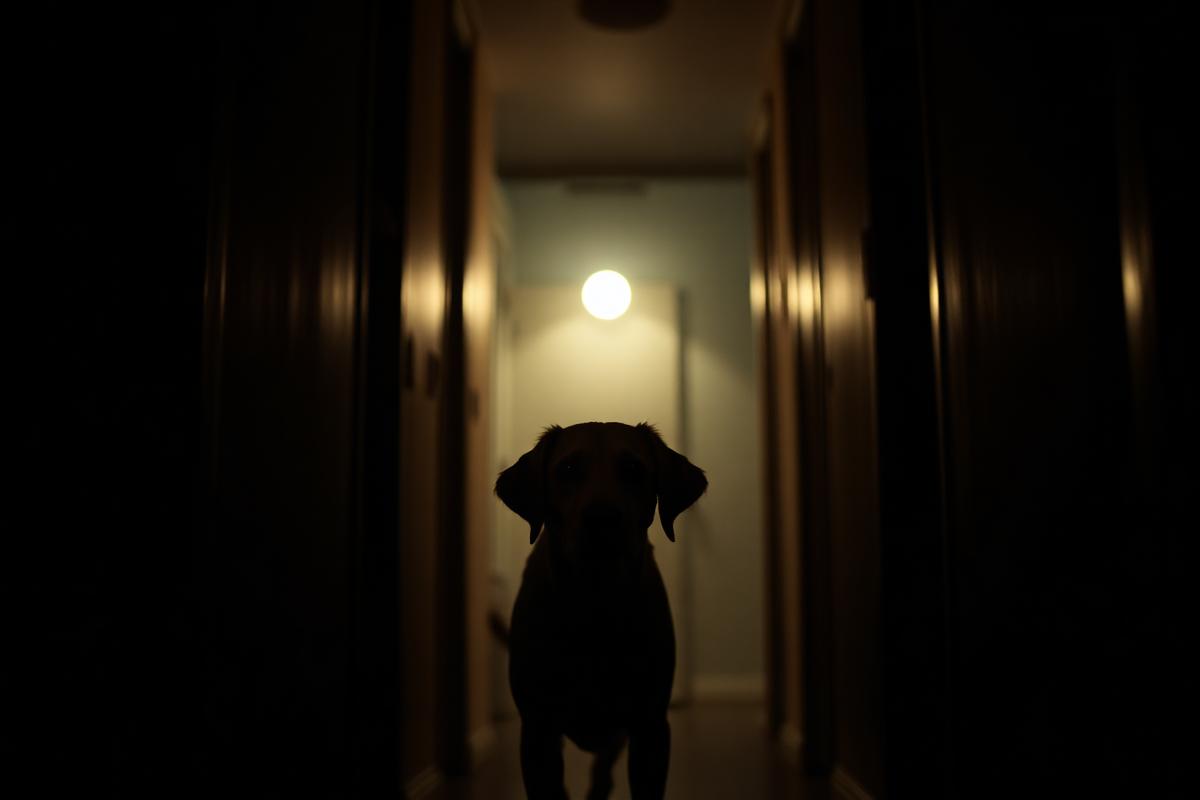
Night-time restlessness in an older dog usually has a physical or cognitive cause rather than a behavioural one. Common reasons include discomfort that is worse when the house is quiet, a full bladder, fading sight or hearing, and age-related changes in the sleep and wake cycle. It is worth investigating rather than accepting.
Families in Chilliwack tend to describe the same picture. The dog settles fine at nine, then at two in the morning the claws start on the hallway floor. Up, down, circle, stand in a corner, stare at nothing, pant. Everybody in the house is awake, and by the third week nobody is coping well.
Why the Small Hours Are the Worst
Nothing about a dog's body actually changes at two in the morning. What changes is everything around them.
Through the day there is noise, movement, food and company, and all of it competes for their attention. At night the distractions are gone, the house is dark, and whatever has been sitting quietly underneath has the floor to itself. Discomfort that was manageable at four in the afternoon becomes the only thing there is.
Old dogs also sleep more shallowly and in shorter blocks than they did at four. Waking several times a night is normal. Waking, and then being unable to settle, is the part worth looking at.
The Usual Causes, Roughly in Order
Discomfort. This is the most common answer by a distance. A dog who cannot get comfortable will keep trying new positions, and the pacing is the search. Look for whether they lie down and get straight back up, whether they settle only on soft surfaces now, and whether the pacing eases once they are up and moving.
Needing to toilet. Bladder capacity and control both change with age. If the pacing ends with a puddle, or with obvious relief once they get outside, that is your answer. A late-night garden trip added to the routine solves a surprising number of cases.
Cognitive change. Ageing brains can lose the rhythm that separates day from night, so the dog is genuinely awake and genuinely confused. The classic version is a dog standing in a corner, or on the wrong side of a door, or staring at a wall, and not seeming to know how they got there.
Fading sight or hearing. A dog who cannot see well in low light, or cannot hear the house settling, may be far less confident at night than during the day. These dogs often want to be physically touching someone.
Feeling too hot or too cold. Old, thin dogs feel cold. Heavy-coated dogs in a warm bedroom feel hot. Both pace.
Anxiety. Being alone matters more to some older dogs than it used to, and a dog who has always slept downstairs may suddenly not tolerate it.
More than one of these is usually running at once, which is why single fixes often only half work.
What to Watch and Write Down
Vague reports get vague answers, so spend a week collecting specifics before you speak to anyone.
Note the time it starts and how long it lasts. Note whether they settle if you get up, and whether they settle if you ignore it. Note whether they toilet during the episode. Note whether the panting happens only at night or also during the day. Note whether they seem to be looking for something, or simply cannot get comfortable.
Film thirty seconds of it. It feels absurd at three in the morning, and it is the single most useful thing you can hand a veterinarian, because dogs almost never do it in a consulting room.
Keep the note going for at least a week. One bad night is weather. A pattern is information.
What Helps at Home
None of this replaces having your dog examined, and none of it should delay it. It does tend to take the edge off while you get answers.
Add a late toilet trip. Last thing, every night, even if they do not ask. This is the cheapest fix on the list and it works more often than it should.
Leave a low light on. A night light in the hallway helps a dog whose sight has faded and who no longer navigates a dark house confidently.
Sort out the footing. A dog who slips on the way to the water bowl at two in the morning will be more reluctant and more anxious the next night. Runners or mats along the route help.
Move the bed closer. If they settle when someone is near, that is not manipulation, it is information. A bed in your room is a reasonable answer.
Keep the day predictable. Meals, walks and bedtime at consistent times give a confused dog more structure to hang on to.
Check the temperature. A blanket for a thin old dog, or a cooler spot for a thick-coated one.
Do not punish it. A confused or uncomfortable dog who is told off at night becomes an anxious dog who is also confused and uncomfortable.
Take It to a Veterinarian
Night restlessness is one of the most treatable-feeling problems families put up with for months, and one of the most common signs of something that could be addressed.
Only a veterinarian who examines your dog can say what is behind it, and several of the possible causes are manageable. Bring the notes and the video, and ask directly whether your dog is comfortable. Never give a dog human sleep aids or painkillers. Both can cause serious harm, and neither treats the cause.
Go sooner rather than later if the restlessness came on suddenly over a few days, if your dog seems disoriented during the day as well, if they are panting heavily at rest, or if they are crying out rather than whining.
Frequently Asked Questions
Is night pacing just part of getting old? Ageing changes sleep, but persistent pacing and whining is a signal rather than an inevitability. Most cases have a cause worth identifying.
Should I get up to them or ignore it? Try both for a few nights and record which works, because the answer itself is useful information. Ignoring it will not fix discomfort or a full bladder.
Can I give my dog something to help him sleep? Not without veterinary direction. Human sleep aids and painkillers can seriously harm dogs, and they mask the cause rather than treating it.
Why does he stand in corners? Getting stuck in corners or behind furniture is a well-recognised sign of age-related confusion and is worth reporting specifically, because it is quite distinctive.
How long should I try home changes before booking an appointment? Make the changes and book the appointment at the same time. A week of notes will make that appointment far more productive.
Published by the team at Home Euthanasia Veterinary Services.
This article is provided for general information and is not a substitute for veterinary advice about your own pet. If your pet is in distress or you are worried about their comfort right now, please contact your regular veterinarian or your nearest emergency animal hospital.