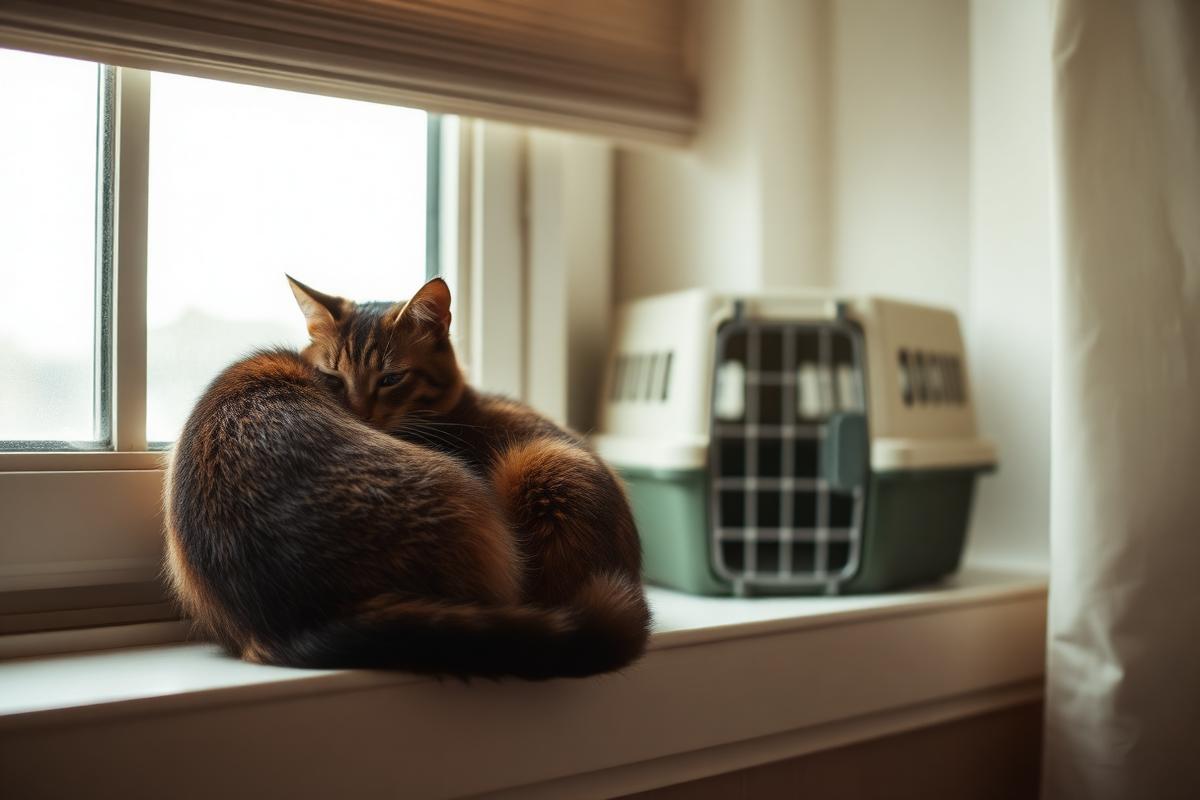
For a pet who finds car journeys or veterinary buildings frightening, a goodbye at home removes the travel, the carrier, the waiting room and the unfamiliar smells. Their last hour is spent in the place they know best. Clinics provide excellent care, so the difference here is not quality. It is setting.
Plenty of families in Maple Ridge have spent years managing an animal who shakes in the car, or a cat who hides for two days after every appointment. When the last visit comes around, that history matters more than it ever has.
What the Journey Actually Costs a Fearful Pet
Think about what a routine trip involves for an anxious animal. The carrier comes out, and the cat is gone before it touches the floor. The dog sees the lead at the wrong time of day and starts pacing. There is a car ride they associate with nothing good. Then a car park, a door, a room full of unfamiliar animals, a hard floor, a scale, and a smell that their nose reads as a warning long before you have signed anything.
By the time anyone examines them, a fearful pet is already braced. That is a lot to ask on any day, and it is a great deal to ask on their last one.
There is a second cost that families feel keenly afterwards. If your dog's final memory is the car, and your final memory is a waiting room, that is what stays. Removing the journey is the core of in-home end-of-life care.
Pets Who Tend to Find Home Easier
Cats. Almost universally. Cats are territorial in a way dogs are not, and the carrier is often the single most stressful object in their life. A cat who can stay on their own windowsill stays recognisably themselves.
Large or elderly dogs with mobility problems. Lifting a big dog with sore hips into a vehicle is painful for them and hard on you. If getting into the car has become a two-person job, that alone is a reason to consider a home visit. Non-slip footing, a support harness and a ramp all help, but there comes a point where the vehicle itself is the obstacle.
Dogs with genuine fear of veterinary settings. The ones who plant their feet in the car park, who tremble on the scale, who have needed a muzzle for years.
Reactive dogs. A dog who cannot cope with other dogs in a shared space carries tension throughout, and so does the person holding the lead.
Pets who are simply very tired. Sometimes there is no fear at all, only an old animal who no longer has the reserves for an outing.
What Changes When It Happens at Home
The most visible difference is that your pet does not know anything is happening. There is no departure and no arrival. Someone comes to the house, sits on the floor, and lets the dog sniff a hand.
Time works differently too. The veterinarian arrives quietly, meets your pet before anything else, and explains each step before it happens. Sedation is given first and unhurried, so your pet drifts into a deep sleep while lying against you, in their own bed, on their own blanket. Nothing moves forward until you say you are ready. The order of it never changes, and how a home visit works is explained to you in full before anything is arranged.
The room is yours as well. Family can be present, other pets can be in the room, children can stay or step out, and afterwards nobody has to gather themselves in a car park.
When a Clinic Is the Right Choice
It is worth being straightforward about this, because home is not automatically better for every family or every situation.
If your pet is in acute distress right now, whether that is difficulty breathing, a serious injury, uncontrolled pain, or a sudden collapse, do not wait for an appointment. Go to your regular veterinarian or your nearest emergency animal hospital. Speed matters more than setting.
Some pets also genuinely like their clinic, particularly those who have been seen there since they were young and who greet the staff at the door. If your dog's happiest place is the front desk, that is a real consideration.
Some families prefer not to have the memory attached to their living room, and that is an entirely valid reason. There is no correct answer, only the one that fits your household.
If Your Pet Is Anxious Even at Home
Some animals are wary of any new person on their territory. A few things help. Ask for a soft knock or a text on arrival instead of the doorbell. Let your dog be somewhere settled rather than at the door. Have their own blanket down. Keep the household calm, because the pet is reading you before they read anyone else.
Mention the anxiety in your first email, along with anything that has helped in the past. It is useful to know before the visit, not during it.
Frequently Asked Questions
Will my pet be frightened by a stranger in the house? Most settle quickly, because the setting is still theirs. Arrival is quiet and unhurried, and the first minutes are spent simply meeting your pet.
My cat hides whenever anyone comes to the door. What then? Say so in advance. Many families keep the cat in one calm room beforehand, and the visit adapts to wherever the cat is.
Is a home visit slower than a clinic appointment? It is unhurried by design. Plan for around an hour, with as much time afterwards as you want.
Is it worth booking ahead for a fearful pet? Yes, and it often helps. Arranging a time in advance lets you plan the room, the people and the routine rather than improvising.
How far will a mobile practice travel? Travel limits differ between practices and are often flexible at the edges, so an address that looks too far on a map may not be.
Published by the team at Home Euthanasia Veterinary Services.
This article is provided for general information and is not a substitute for veterinary advice about your own pet. If your pet is in distress or you are worried about their comfort right now, please contact your regular veterinarian or your nearest emergency animal hospital.